

How many cameras does your event actually need?
How many cameras does your event actually need is one of the first questions we get asked, and the honest answer is that it depends on what you are trying to capture, not on what looks impressive on a quote. Each additional camera buys something specific. It is worth knowing what, before you pay for it.
How many cameras does your event actually need
Start with a single locked off wide. Positioned correctly, one camera covering the whole stage gives you a usable, watchable record of everything that happens on it. For a straightforward single speaker session, an internal briefing, or a budget conscious recording where the goal is simply to have proof the event happened and what was said, one well positioned camera genuinely is enough. Do not let anyone tell you otherwise just to sell a bigger crew.
From there, each camera adds a specific capability.
- A second camera on the lectern or panel gets you close ups of the speaker's face, which matters enormously for engagement. Cutting between a wide shot and a close up gives the footage rhythm and keeps a static single speaker session watchable for longer than the wide shot alone ever could.
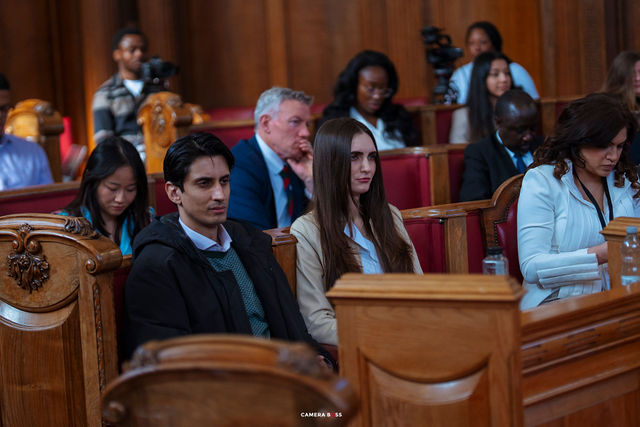
- A third camera on the audience captures reaction, laughter, applause and the sense of a room actually responding to what is being said. This matters most for keynotes, awards and anything where audience response is part of the story you are telling afterwards.
- A fourth camera on slides or a roving position solves the problem of screen content becoming unreadable through a wide shot, or gives you the flexibility to grab detail shots, sponsor branding and cutaways during quieter moments.
Recording versus switching live
A crucial distinction that often gets missed: recording multiple camera feeds is not the same as switching them live. Four unattended cameras recording to four cards give you four separate files that someone then has to sync and cut together in the edit, which takes real time and real cost after the event. A live switched production, with an operator cutting between the same four cameras in real time, gives you a finished sequence the moment the event ends, ready to publish or stream. The number of cameras is only half the equation. Whether they are switched live by a person or simply left running unattended changes both the cost and the turnaround time enormously.
An unmanned camera captures footage. An operated camera captures a moment, at the moment it actually happens.
This is worth dwelling on, because it is the single biggest misunderstanding in camera briefs. An unmanned camera on a tripod, however well positioned, cannot reframe, refocus, or follow a speaker who moves. It captures whatever passes in front of it. An operator watching that same position can zoom in as the moment matters, follow a speaker across a stage, or catch an award winner's expression as their name is read out. For anything where a specific, unrepeatable moment needs to be caught cleanly, an operated camera is not a luxury, it is the difference between having the shot and not.
Panel sessions and awards walk-ups
Panel sessions genuinely need more than one operated camera. With four or five people speaking in an unpredictable order, a single camera is constantly reframing and missing reaction shots from panellists who are not currently talking. Two operated cameras, one wide and one that can pick out whoever is speaking, cover this properly. Awards walk ups are their own case: the moment a winner is announced, walks to the stage, and receives their award happens once and cannot be reshot. This is exactly the scenario where a fixed audience camera plus an operated stage camera earns its cost, because between them they cover the reaction and the handshake without anyone guessing which will matter more in the edit.
Camera count and edit time
More cameras generally means more editing time, not less, because someone has to sync, review and select from every additional angle. A well run one day conference typically yields 15 to 30 usable short-form clips and 6 to 12 full session videos once everything is through the edit, and a heavier camera count widens your options for both without necessarily lengthening the shoot day itself. The trade off to plan for honestly is not shoot day cost alone, it is the edit hours that follow. If your priority is a fast turnaround rather than the widest possible selection of angles, a smaller, well operated camera set up will get finished footage into your hands sooner than a larger unmanned one ever will, simply because there is less material to sort through afterwards.
It also pays to think about where the cameras sit relative to natural breaks in the day. A camera that only ever needs to be in one place, such as the audience wide during an awards dinner, can run unattended for long stretches. A camera that needs to follow a moving subject, cover a Q and A with a roving microphone, or reframe quickly between panellists, needs a person behind it. Match the operating model to what each position is actually being asked to do, rather than defaulting to either fully operated or fully unmanned across the whole event.
| Event type | Sensible starting configuration |
|---|---|
| Single speaker briefing or webinar recording | One locked wide |
| Keynote or conference main stage | Wide plus operated close up, add audience camera if budget allows |
| Panel discussion | Two operated cameras, one wide, one picking out speakers |
| Awards dinner or ceremony | Fixed audience camera plus operated stage camera |
| Multi-track conference with live stream | Wide, close up, audience and slides or roving, all switched live |
Tell us your event date, venue and a brief description of the programme, and we will recommend a camera configuration that matches what you actually need to capture, rather than what looks best on a quote.
Sources: Gass Productions
Read next
More on running corporate events
What does it cost to live stream a corporate event in the UK?
There is no fixed UK rate card for corporate live streaming, and honest suppliers say so openly. Here is what actually drives the…
PHOTOGRAPHYHow much does a conference photographer cost in the UK?
Published UK rate guides put conference photography cost anywhere from a few hundred pounds to several thousand. Here is what actu…
HEADSHOTSCorporate headshots: what a UK team day actually costs
Corporate headshots pricing is built around group size more than any other factor. Here is how UK team day costs actually scale, w…
Next step
Tell us the date and the room
Send the date, the venue and roughly how many people are in the room. We will come back with whether we are free, what the right crew size is for that programme, and a written quote you can put in front of finance.
Send the brief → Scope call → Written quote → Technical survey → Event day
Cameraboss Multimedia Ltd · Creative Photographer of the Year, Creative Industry Awards 2024 · Photography, film and live production from one team on one timeline
Call or WhatsApp 07823 714814 · camerabossmultimedia@gmail.com