

How to get thirty social clips out of one conference day
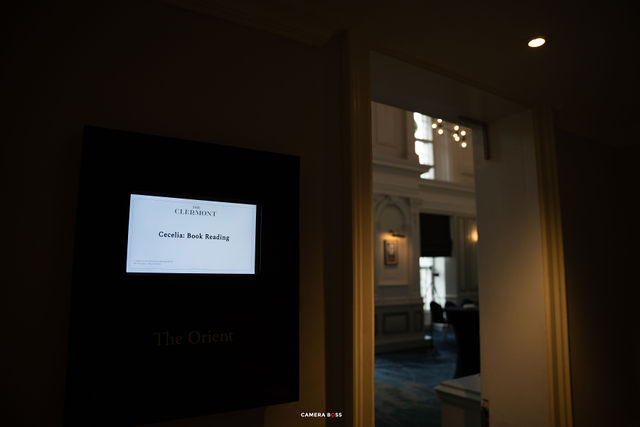
Getting thirty social clips out of one conference day is a production method, not a wish list you hand to an editor afterwards. It depends on decisions made weeks before the event, not on how many cameras turn up on the day.
Why thirty social clips out of one conference day is a realistic target
Data collated by Gass Productions puts the usable yield of a well run one-day conference at 15 to 30 short-form clips plus 6 to 12 longer session videos. Thirty clips sits at the top of that range, and it is only reachable when the clip brief exists before the first speaker walks on stage, not when an editor is left to hunt through hours of footage after everyone has gone home.
The same source notes that 73 per cent of consumers use short-form video to discover products and services (Wyzowl), and that clip consumption in the thirty days after an event routinely exceeds total live viewing. In other words, the clips are not a bonus for people who missed the day. For most of your audience, the clips are the event.
Decide the clip brief before the event
A clip brief is a short document, not a shot list. It answers three questions before anyone picks up a camera:
- Which sessions are worth a standalone clip, and which are only worth a soundbite inside a recap?
- Who is the clip for: sponsors, prospects, recruitment, your own feed?
- What is the call to action on each clip, if there is one?
Without this, a crew films everything at the same level of attention and an editor spends the following week trying to work out which thirty minutes actually matter. With it, the crew knows in advance which three sessions get the tighter coverage and which get a single wide shot for reference.
Capture a clean audio feed
A clip lives or dies on its audio, not its picture. A soundbite with a hollow, roomy recording is unusable no matter how well it is framed. Take a feed straight from the desk or the radio mic system rather than relying on a camera mounted microphone across the room. On multi-camera jobs this is a single cable back to the recording rig, and it is the difference between a clip an editor can cut in ten minutes and one they have to fight all afternoon.
Brief speakers on one quotable sentence per session
Ask each speaker, in advance, for one sentence they would be happy to see out of context on LinkedIn. You are not scripting them. You are giving them permission to say something with a clear beginning and end, rather than a sentence that only makes sense inside a twenty minute talk. Chairs and moderators can help here too, by asking a direct question near the end of a session that is likely to produce a usable answer.
Shoot vertical as well as horizontal
A horizontal recording of the main stage will not cut cleanly into a vertical clip without cropping half the slide off or leaving the speaker awkwardly off centre. If vertical clips are part of the brief, that needs a dedicated vertical frame from a second camera or a reframed feed, decided at the planning stage rather than solved with a crop tool the week after.
The clips are not what is left over after the film is finished. They are a deliverable in their own right, and they need their own camera position.
An editor on site, working during the day
The single biggest change in output comes from having an editor cutting on site while the conference is still running, rather than starting from scratch once the last delegate has left. Footage from the morning sessions can be logged, rough cut and ready to review by lunchtime. This is what makes a same-day drop realistic, and it is also what turns a target of thirty clips from an aspiration into a schedule with hours attached to it.
Subtitles and silent autoplay
Most social platforms autoplay without sound, so a clip without burnt-in subtitles loses most of its audience in the first two seconds. Subtitles are not an afterthought added in an export template. They need to be timed against the same clean audio feed mentioned above, and checked for accuracy against names, company names and any numbers the speaker uses.
Consistent titling across a series
Thirty separate clips look like an accident unless they carry a consistent title card, colour treatment and lower third. A simple template, built once before the event and reused across every clip, does more for how professional the output looks than any individual edit. It also lets sponsors and speakers recognise their own clip immediately when it lands in their feed.
The same-day drop, while the room is still full
A handful of clips released while the conference is still running do more for reach than the same clips released a week later, because the people in the room are still looking at their phones and are still willing to share what they were just part of. This does not need to be all thirty clips. Three or four strong same-day clips, built from the morning sessions, are usually enough to prove the day is worth following.
A publishing schedule that spreads clips across the month
The remaining clips should not all land in the week after the event. Spread them across the following month, in a schedule agreed before the event so nobody has to decide on the fly what goes out and when. This is what turns thirty clips into thirty separate chances to be seen, rather than thirty posts competing with each other in the same seven days.
If you have a conference date, a venue and a rough running order, send them over and we will build the clip brief around your actual sessions rather than a generic template.
Sources: Gass Productions
Read next
More on running corporate events
What does it cost to live stream a corporate event in the UK?
There is no fixed UK rate card for corporate live streaming, and honest suppliers say so openly. Here is what actually drives the…
PHOTOGRAPHYHow much does a conference photographer cost in the UK?
Published UK rate guides put conference photography cost anywhere from a few hundred pounds to several thousand. Here is what actu…
HEADSHOTSCorporate headshots: what a UK team day actually costs
Corporate headshots pricing is built around group size more than any other factor. Here is how UK team day costs actually scale, w…
Next step
Tell us the date and the room
Send the date, the venue and roughly how many people are in the room. We will come back with whether we are free, what the right crew size is for that programme, and a written quote you can put in front of finance.
Send the brief → Scope call → Written quote → Technical survey → Event day
Cameraboss Multimedia Ltd · Creative Photographer of the Year, Creative Industry Awards 2024 · Photography, film and live production from one team on one timeline
Call or WhatsApp 07823 714814 · camerabossmultimedia@gmail.com